


What Does a Professional Access Report Look Like? A Clear Guide for Malaysian Developers, Architects, and Building Owners
In Malaysia’s evolving landscape of accessibility compliance — driven by MS 1184:2014 Universal Design and Accessibility in the Built Environment, UBBL By-Law 34A, and the upcoming amendments to the Persons with Disabilities Act — a well-prepared access report (also called a disability access audit report or compliance report) is essential. It provides evidence-based identification of barriers, practical recommendations, and a roadmap to genuine inclusion.
At AccessConsultants.asia, our Malaysian-registered architects and qualified access consultants — experienced in both MS 1184:2014 and Australian standards like AS 1428 series — deliver detailed, user-friendly access reports accepted by authorities such as DBKL, JKM, KPWKM, and local councils. These reports go beyond checklists; they support submissions, reduce regulatory risk, and promote participation interwoven into everyday life.
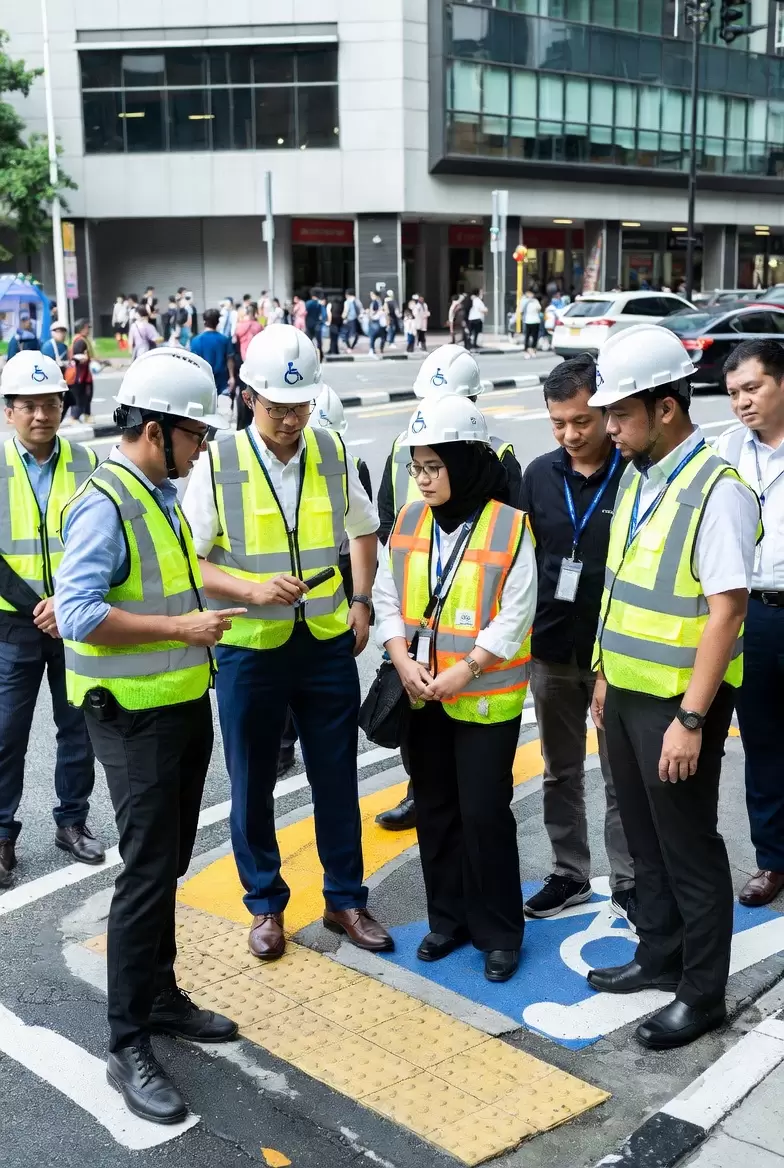
Typical Structure of a Professional Access Report
A high-quality access report is structured for clarity, with visual aids like annotated drawings, photographs, and compliance tables. It typically includes:
Executive Summary
- Overview of the audit purpose, key findings, and overall compliance level.
- Highlights critical barriers and high-priority recommendations.
- Emphasises benefits for the whole community: OKU, families with prams, older adults, delivery personnel, and anyone navigating the space.
Purpose and Scope of the Audit
- Clearly states objectives: Identify barriers to access, assess compliance with MS 1184:2014, UBBL By-Law 34A, and broader intent of the Persons with Disabilities Act.
- Covers risk management under anti-discrimination principles.
- Promotes proactive inclusion: Fixing barriers improves usability for everyone — mothers pushing prams, people carrying items, older visitors — creating safer, more welcoming environments.
Building Elements Reviewed
- Detailed list of inspected areas, such as:
- Connections to principal pedestrian entrances
- Car parking (including designated OKU bays)
- Reception areas and counters
- Circulation spaces (hallways, corridors)
- Stairs, ramps, and vertical access features (lifts)
- Amenities (accessible toilets, ambulant facilities, proposed bathrooms)
- Workrooms, public areas, and ancillary spaces
- Detailed list of inspected areas, such as:
Site Observations and Discussion
- Narrative from the on-site inspection (date, time, duration).
- Real-world behaviour analysis: How people (including OKU, wheelchair users, pram pushers) naturally use the space.
- Photographic evidence (appendixed) showing everyday use, shared spaces, or practical dynamics.
- Risk-based approach: Where low-traffic or pedestrian-oriented areas function safely without major changes, aligned with universal design principles.
Time on site usually averages around an hour for a focused audit of a typical building or facility, though this can extend depending on size, complexity, number of levels, and specific elements reviewed. Our team — including experts like Ahmad Syafiq (with Certificate IV equivalency in Access Consulting and hands-on Malaysian audits), Alexandra (Sandy) Gray (Qualified Access Consultant and ACAA member), and our architects with extensive audit experience — ensures thorough yet efficient site visits.
Snapshot of Key Access Issues
- Prioritised summary of critical non-compliances.
- Illustrated with annotated plan snippets or marked-up drawings (e.g., Appendix with photos and diagrams highlighting gradients, door widths, grab bar heights, tactile paving gaps).
Detailed Compliance Assessment and Recommendations
- Item-by-item review against MS 1184:2014 requirements (e.g., ramp gradients max 1:12, minimum 1500 mm clear paths, slip-resistant surfaces, high-contrast signage, Braille/lift announcements).
- Priorities based on impact:
- High priority: Parking, safe entry/exit, accessible toilets/showers — essential for independent access.
- Medium priority: Public areas, staff workspaces.
- Low priority: Ancillary facilities.
- Practical, proportionate solutions: Performance-based options where strict compliance is challenging, cost estimates, and staging advice.
- Integration into Disability Access and Inclusion Plans (DAIP) or equivalent strategies.
We are passionate advocates for disability access and inclusion, committed to creating equitable built environments. At the same time, we are practical people with a good grasp of the concept relating to undue hardship (or equivalent considerations under Malaysian law and anti-discrimination principles). Where full compliance would impose disproportionate costs, structural impossibilities, or excessive burdens on owners, we explore balanced, performance-based solutions that achieve meaningful access without causing undue hardship — always aligned with local enforcement realities and the intent to promote dignity and participation.
Appendices
- Marked-up drawings and plans.
- Site photographs with timestamps and annotations.
- Compliance checklists or matrices.
- References to standards (MS 1184:2014, UBBL, Australian equivalents where bridging best practices).
The report uses a user-friendly, accessible format — clear headings, bullet points, tables, and visuals — making it easy for clients, architects, contractors, and authorities to understand and implement.
Why This Matters in Malaysia Today
With stronger enforcement on the horizon and Budget 2026’s RM1.4 billion OKU focus, access reports are key tools for:
- DBKL/JKM submissions
- Reducing complaint risks
- Achieving genuine inclusion that benefits everyone — fewer trip hazards, better wayfinding, covered paths reducing weather issues, less congestion, stronger community interactions, and improved well-being across generations.
This is a smart city initiative: Promoting participation interwoven into everyday Malaysian life, one step at a time.
Our Team Delivers Trusted Access Reports
Our Kuala Lumpur-based experts — including Part I and Part II architects with hands-on experience in MS 1184:2014 audits, NDIS/SDA projects, and Australian standards alignment — produce reports that:
- Use BIM tools (Archicad) for precise documentation
- Include performance solutions and regulatory strategies
- Support PAM/LAM CPD training and authority liaison
Whether auditing a commercial building, residential development, hotel, or public facility in Kuala Lumpur, Penang, or beyond, we deliver pragmatic, common-sense advice that restores independence and self-empowerment for OKU while expanding your customer base. People with disabilities have families and networks too — who doesn’t want more customers?
Ready for a professional access audit and detailed report tailored to MS 1184:2014 and your project needs? Contact the team at AccessConsultants.asia today. Operating across Malaysia with hybrid support from Sydney and our emerging Perth market, we help you remove barriers one step at a time.
AccessConsultants.asia — Removing barriers to access, promoting participation in everyday life.
Keywords: access report Malaysia, disability access audit report, MS 1184:2014 compliance report, OKU access audit, barrier free building report Kuala Lumpur, universal design audit Malaysia, accessible building compliance report, DBKL access submission report, JKM OKU audit, undue hardship access solutions Malaysia, performance-based access report
Let’s create spaces where everyone can participate independently and with dignity.