


The Uncomfortable Journey: How Environmental Design Barriers Undermine OKU Self-Empowerment and Independence in Malaysia
In Malaysia’s journey toward a truly inclusive society, the upcoming amendments to the Persons with Disabilities (PwD) Act 2008 and the RM1.4 billion OKU allocation in Budget 2026 represent important progress. Yet for many OKU — Orang Kurang Upaya — accessing government services remains an exhausting, disempowering experience shaped not by their abilities, but by preventable barriers in the built environment.
From leaving home to returning, these physical obstacles strip away self-empowerment — the ability to make independent decisions that directly impact one’s own life. Whether applying for benefits, renewing documents, attending hearings, or engaging with JKM, DBKL, or other agencies, OKU are too often forced to rely on family members or carers simply to navigate the journey. True independence means deciding for oneself, speaking for oneself, and managing one’s affairs with dignity. When the environment denies this, participation in civic life shrinks, self-confidence erodes, and personal agency is diminished.
At AccessConsultants.asia, we witness this reality daily through our access audits, compliance reviews, and capacity-building programs across Kuala Lumpur, Sydney, and our growing Perth operations. Removing these barriers is not only about OKU — it benefits mothers with prams, delivery workers, older adults, and every Malaysian navigating the city. Safer, covered walkways reduce traffic jams, encourage friendly “hello” moments between neighbours, free older generations from apartment isolation, and foster intergenerational well-being. This is universal design in action — a smart city initiative promoting participation interwoven into everyday Malaysian life, one step at a time.
The Outbound Journey: When the Path Itself Steals Independence
The challenges begin at the front door and immediately test self-empowerment.
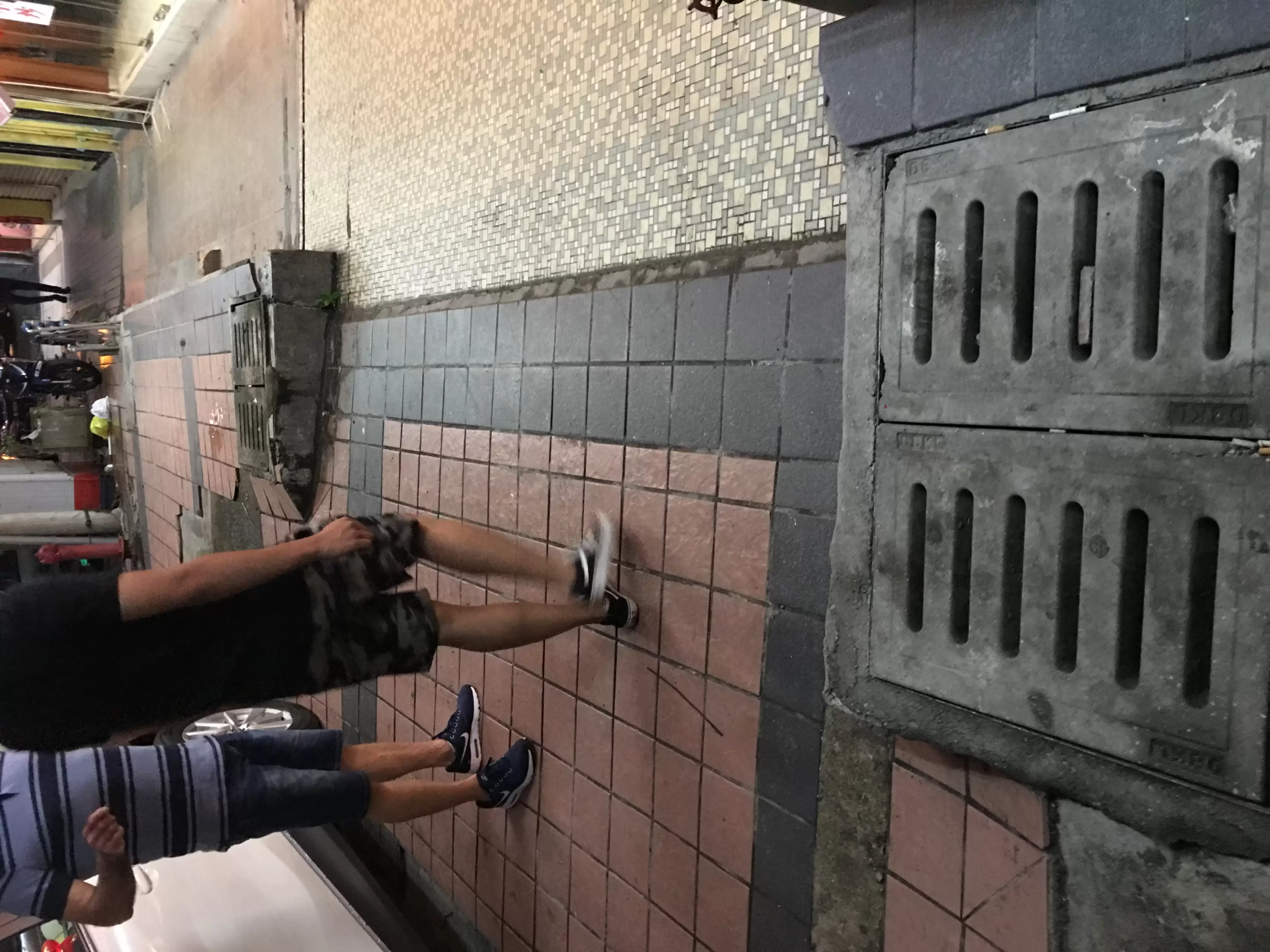
Uneven sidewalks, missing tactile paving, narrow paths under 1.2 m wide, and obstacles like parked motorcycles force detours onto busy roads. For wheelchair users, this often means depending on others to push or carry them. Visually impaired OKU lose the confidence of independent travel when guiding blocks are absent or damaged and high-contrast signage is missing.
Public transport adds further barriers: inaccessible buses, non-functional lifts at LRT/MRT stations, and platforms without proper edge protection. In Kuala Lumpur and other centres, narrow sidewalks, dangerous drop curbs, and inadequate accessible parking are common complaints. Tropical downpours without covered walkways turn short trips into ordeals.
When every step requires assistance, the simple act of leaving home to handle personal affairs becomes a negotiation rather than a choice. Self-empowerment fades as decisions about timing, route, and even whether to go at all are dictated by the environment and the availability of support.
Arriving at the Agency: First Impressions That Limit Personal Agency
Reaching the government building should feel empowering — a place where one’s voice matters. But, do environmental circumstances signal the opposite?
Many facilities still have entrance steps without compliant ramps (maximum 1:12 gradient, 1500 mm wide, with landings and handrails per MS 1184:2014). Heavy non-automatic doors, distant OKU parking bays, and poor level access require help from others before the visit has even begun.
Inside, confusing wayfinding, inadequate lighting, small lifts without Braille or audible announcements, and complex layouts further erode confidence. When OKU must rely on companions to read signs or locate counters, the message is clear: this space is not designed for you to manage alone.
Inside the Agency: Advocating for Oneself Becomes Harder
At service counters, high fixed desks prevent eye-level, independent communication for wheelchair users. Waiting areas lack space for mobility aids or quiet zones for sensory needs. Meeting rooms without hearing loops or accessible layouts force OKU to raise their voice or depend on others to explain their needs and advocate for their rights.
Inaccessible toilets — doors swinging the wrong way, insufficient transfer space, or missing emergency alarms — add humiliation and practical dependence. These details, governed by MS 1184:2014 Universal Design and Accessibility in the Built Environment and UBBL By-Law 34A, determine whether an OKU can handle their own affairs with dignity or must hand control to someone else.
The return journey, already tiring from the outward challenges, feels even heavier when the entire process has undermined one’s sense of self-reliance. Many OKU postpone essential visits, delaying decisions that affect their health, finances, and future — the very opposite of self-empowerment.
Support Needs Along the Way — and the Power of True Independence
OKU have families and networks too. When the built environment demands constant assistance, entire households carry the load. But when environments enable independence, families gain freedom, relationships strengthen through choice rather than necessity, and communities thrive with more active, confident participants.
Universal design delivers economic and social returns for everyone: fewer trip hazards for delivery riders, easier pram access for young parents, better wayfinding for all, and reduced isolation for seniors. Walkable, covered, barrier-free streets mean fewer cars, less congestion, stronger neighbourhood bonds, and greater well-being across the nation. This is not just about OKU — it is about promoting participation interwoven into everyday life and building a smarter, kinder Malaysia.
Building Self-Empowerment Through Better Design
Compliance with MS 1184:2014 and UBBL By-Law 34A provides the clear roadmap:
- Minimum 1500 mm clear paths, slip-resistant surfaces, gentle gradients
- Tactile paving, high-contrast signage, and automatic doors
- Adequate manoeuvring space, accessible toilets with emergency features
- Integrated lifts, ramps, and sheltered parking with direct routes
- Lighting and acoustics that support independent communication and navigation
Our Malaysian-registered architects and qualified access consultants at AccessConsultants.asia — with PAM involvement, hands-on local audits, and proven experience aligning Australian best practices (AS 1428, adaptable housing) with Malaysian needs — deliver practical, common-sense solutions that restore independence and self-empowerment.
We provide:
- Independent access audits and performance solutions
- Compliance matrices and risk registers for DBKL, JKM, KPWKM submissions
- Capacity-building workshops and PAM/LAM CPD training using real Malaysian case studies
- Regulatory strategy support for government agencies and architectural practices
Whether managing public buildings, designing new developments, or operating facilities in Kuala Lumpur, we help you move beyond minimum compliance to environments where every OKU can make their own decisions, advocate for themselves, and participate fully — with dignity and confidence.
Removing Barriers One Step at a Time
Malaysia stands at a pivotal moment. By prioritising universal design today, we create spaces where OKU exercise genuine self-empowerment and independence in decisions impacting their own lives — while everyone benefits from safer, more convenient, more connected environments.
People with disabilities have families and networks too. When access improves, the customer base for every business and service grows.
Ready to create truly empowering spaces? Contact the team at AccessConsultants.asia today for a professional access audit, training workshop, or compliance review. Operating across Malaysia with hybrid support from Sydney and Perth, we deliver pragmatic, evidence-based solutions that work.
AccessConsultants.asia — Removing barriers to access, one step at a time. Promoting participation interwoven into everyday Malaysian life — and restoring the power of independent decisions to every OKU.
Keywords: OKU access barriers Malaysia, disability access government services Malaysia, MS 1184:2014 compliance, UBBL By-Law 34A, universal design Malaysia, barrier free environment Kuala Lumpur, accessible buildings Malaysia, inclusive design consultant Malaysia, self-empowerment OKU, independent living Malaysia, OKU independence built environment
Let’s build a Malaysia where every journey to government services is dignified, independent, and empowering — because everyone deserves to make their own decisions about their own life.