

Frequently Asked Questions (FAQ) about MS 1184:2014 – Universal Design and Accessibility in the Built Environment: Code of Practice (Second Revision)
MS 1184:2014 is Malaysia's essential national standard for universal design and accessibility in the built environment. Published by Department of Standards Malaysia (STANDARDS MALAYSIA), it provides detailed guidelines to create inclusive spaces usable by persons with disabilities (PwDs), the elderly, families with young children, and all users. This code promotes equitable access, aligns with the Persons with Disabilities Act 2008 (Act 685), and satisfies Uniform Building By-Laws (UBBL) 1984 By-Law 34A requirements for accessible buildings.
AccessConsultants.asia specializes in MS 1184:2014 compliance through independent access audits, design reviews, regulatory strategy, authority liaison (DBKL, JKM, KPWKM), and CPD training workshops for architects, engineers, and facilities managers via PAM and LAM partnerships. Our Kuala Lumpur-based team, supported by Sydney and Perth expertise, delivers practical, culturally sensitive solutions for Malaysian projects in accessible tourism, public infrastructure, adaptable housing, and inclusive developments.
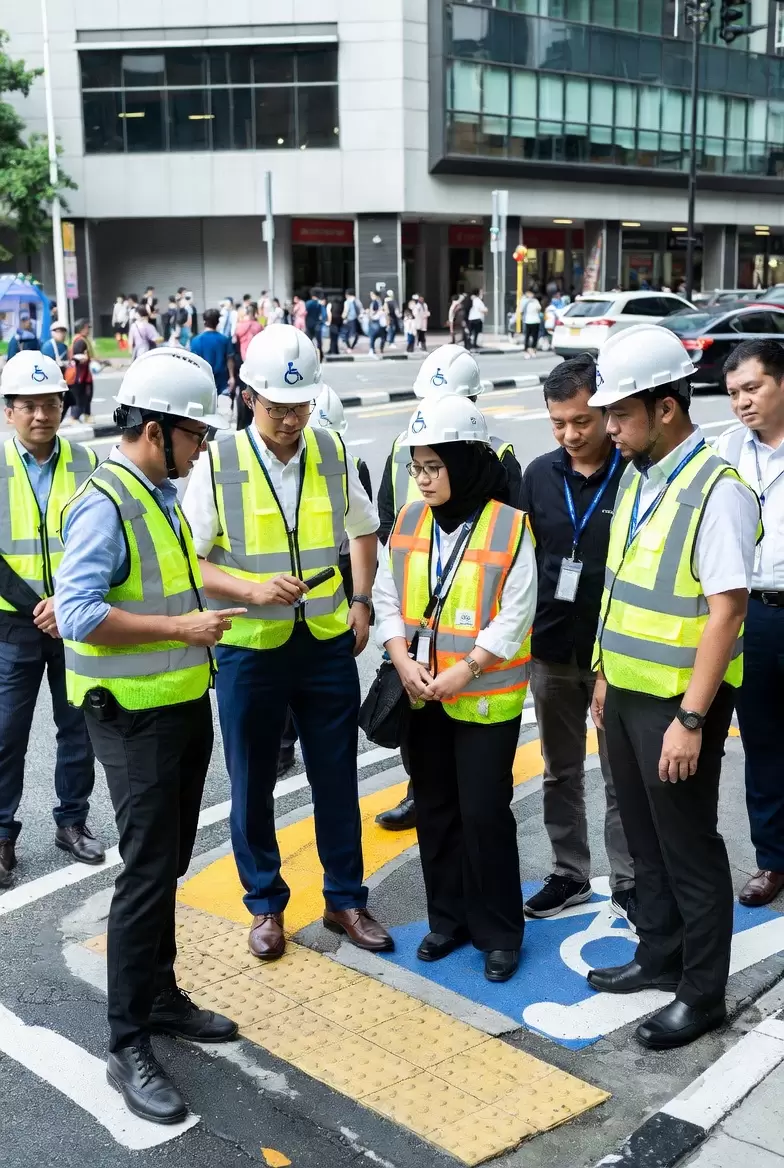
Here are the most common questions about MS 1184:2014:
1. What is MS 1184:2014 and why is it important for Malaysian buildings? MS 1184:2014 is the current Code of Practice for universal design and accessibility in the built environment (Second Revision, with Amendment 1:2017). It replaces older standards (MS 1184:2002 for public buildings and MS 1331:2003 for external access) and shifts focus from disability-specific rules to holistic, user-centered design. Compliance ensures buildings are barrier-free, reduces regulatory risks, supports national inclusion goals, and avoids fines or rework under Act 685 and UBBL By-Law 34A.
2. What does the scope of MS 1184:2014 cover? The standard applies to new constructions, renovations, retrofits, and extensions in public and semi-public buildings. It includes:
- Approach paths, accessible parking, entrances, and circulation.
- Ramps, stairs, lifts, escalators, and vertical movement.
- Internal spaces (toilets, kitchens, bedrooms in non-residential buildings).
- Auditoriums, counters, reception areas, signage, and tactile indicators.
- Lighting, acoustics, visual contrast, controls, and emergency evacuation. Examples: offices, hotels, hospitals, schools, places of worship, transport terminals, car parks, heritage sites, and community facilities (excluding private landed homes).
3. How does MS 1184:2014 relate to UBBL By-Law 34A and other regulations? UBBL By-Law 34A requires accessible features in buildings and deems compliance with MS 1184:2014 (and MS 1183 for fire safety) as satisfying the requirements. It supports the Persons with Disabilities Act 2008, which guarantees PwDs rights to accessible public facilities, amenities, services, and buildings.
4. What are some key design requirements in MS 1184:2014?
- Accessible parking: Designated spaces near entrances with minimum dimensions.
- Ramps: Maximum gradient 1:12, landings, handrails on both sides.
- Doors and entrances: Clear width ≥850 mm, low thresholds, automatic options preferred.
- Lifts: At least one wheelchair-accessible car near accessible entrances; reachable controls, audible/visual signals.
- Toilets: Wheelchair-accessible and ambulant cubicles with grab rails, appropriate fixtures.
- Tactile walking surface indicators (TWSIs): For wayfinding and hazard warnings.
- Signage and contrast: High visual/audible contrast, graphical symbols.
- General principles: Consider principal human abilities (vision, hearing, mobility, cognition); prioritize lifts over long ramps; ensure ongoing maintenance.
5. Who needs to comply with MS 1184:2014? Architects, developers, building owners, contractors, facilities managers, and government agencies involved in public/semi-public buildings. Local authorities (e.g., DBKL) require compliance for approvals. Non-compliance can lead to delays, penalties, or legal issues under Act 685.
6. How does MS 1184:2014 differ from Australian standards like AS 1428? While both promote universal design, MS 1184:2014 is tailored to Malaysian contexts (cultural, climatic, enforcement). AccessConsultants.asia bridges these by adapting Australian best practices (AS 1428 for access, AS 4299 for adaptable housing) to MS 1184 compliance, ensuring seamless hybrid solutions for cross-border projects.
7. How can I ensure compliance with MS 1184:2014 in my project? Engage qualified access consultants early for:
- Design reviews and compliance matrices.
- Access audits and site-specific recommendations.
- Performance Solutions for complex sites.
- Authority submissions and liaison.
- Training workshops to upskill teams. Our experts at AccessConsultants.asia provide pragmatic, evidence-based support, including demonstrative case studies.
8. Where can I obtain the full MS 1184:2014 document? Purchase from Department of Standards Malaysia (STANDARDS MALAYSIA) via MySOL or authorized distributors. It's a 246-page technical reference with annexes on TWSIs, human abilities, and evacuation guidance.
Ready to achieve MS 1184:2014 compliance for your Malaysian project? Contact This email address is being protected from spambots. You need JavaScript enabled to view it. for disability access consulting, universal design audits, regulatory strategy, or CPD training in Kuala Lumpur, Sydney, or Perth. Let's create inclusive, equitable built environments together.
SEO Keywords: MS 1184:2014 FAQ, MS 1184 compliance Malaysia, universal design MS 1184, accessibility built environment Malaysia, UBBL By-Law 34A MS 1184, disability access standard Malaysia, accessible buildings Kuala Lumpur, inclusive design Malaysia